


Kraft washer foam and black liquor recovery
Brown-stock washer foam, EO/PO antifoams, and black-liquor drainage — how to brief Esteem mill defoamers.
Read article
Brown-stock washer foam, EO/PO antifoams, and black-liquor drainage — how to brief Esteem mill defoamers.
Read article
When an acid-medium paper defoamer is the right tool, and when an EO/PO kraft antifoam is not.
Read article
Creping, Yankee release, and sheet hand — separate from bulk debonding surfactants.
Read article
Stickies, pitch, and adhesive contaminants in recycled furnish — surfactants that disperse, not only defoam.
Read article
White-water surfactants, fines, and deposits — how they sit next to retention, sizing, and defoamers.
Read article
Caustic builders, metal complexing agents, and surfactant choice for soak cleaning of steel and aluminium.
Read article
HLB, co-emulsifiers, and ester lubricity for semi-synthetic and soluble-oil metalworking fluids.
Read article
Bath wetting, mist, and brightener-carrier surfactants for plating lines — not a parts-washer formula.
Read article
Ferrous and yellow-metal protection in water-diluted coolants — separate from the emulsifier.
Read article
Alkaline wetting, hydrotrope coupling, and low-foam options when phosphate esters clean metal.
Read article
How hydraulic and way-lube tramp oil splits coolants, and what to write on the emulsifier brief.
Read article
How to move emulsion-polymerization formulas off octyl and nonyl phenol ethoxylates without losing electrolyte stability.
Read article
EO/PO block copolymers for vinyl acetate, acrylate, and styrene-acrylate latices — rheology and salt stability.
Read article
Emulsion stabilizers for floor polish and wax — the application already named on Esteem paint-emulsifier grades.
Read article
Why styrene-acrylate latices grit in salt and pumps, and which stabilizer language to use with Esteem.
Read article
Why titanium dioxide and organic pigments do not share one dispersant dose in architectural and industrial paints.
Read article
How residual emulsifier changes minimum film formation, gloss, and early water resistance.
Read article
Why millbase foam and letdown foam need different defoamers, and how that differs from a paper-mill antifoam.
Read article
Why HEUR viscosity collapses or grains when the latex emulsifier package changes.
Read article
Emulsifying alkyds for water-borne wood coatings: HLB, dry, and water resistance.
Read article
Fatliquor in the rechrome bath: exhaustion, softness, and why it is not the main fatliquor dose.
Read article
Nonionic and cationic fatliquors for nap, sheen, and handle on suede and nubuck.
Read article
Which fatliquor types the Esteem table marks for lightfast white, pastel, and aniline work.
Read article
Dispersing natural fat on vegetable, EI, and semi-chrome leather so grain does not draw.
Read article
Wetting and emulsification in the lime yard — scud, hair, and a clean grain before tannage.
Read article
Wetting back and acid-float stability between deliming and chrome — a small dose with a large effect on tannage.
Read article
How powder and liquid syntans fill leather, and why more fatliquor is the wrong fix for a flat retan.
Read article
Why a greasy grain rejects aniline and pigment finish, and how to brief the fatliquor and the finish together.
Read article
Fatliquor choice for furniture and automotive-style nappa when fogging and heat resistance matter.
Read article
Fatliquor offers aimed at gloving and garment fluff, including tear strength and inner softness.
Read article
Dispersing fatliquors that level dye, and powder syntans that fill and level — when to use which.
Read article
When a cationic top fatliquor is added, and why it must not be mixed into the anionic main offer.
Read article
Rewetting stored or dried wet blue so dye and fatliquor penetrate as if the leather had stayed wet.
Read article
Coco versus lauric monoethanolamide: foam density, viscosity, and which chain to name on the brief.
Read article
When ethoxylated coco monoethanolamide replaces a flake, and how to dose it on activity.
Read article
Why coco diethanolamide is common in dish liquids and restricted in many shampoo briefs.
Read article
Why clear shampoos cloud with CMEA, and how fill temperature and amide level set the limit.
Read article
How coco monoethanolamide moves the salt curve of SLES shampoos and body washes.
Read article
Why CMEA does less in glucoside and sulfosuccinate systems, and what to specify instead of a SLES habit.
Read article
What to ask for on a CDEA certificate: residual DEA, assay, and why it is separate from foam performance.
Read article
How acid value and free amine describe an alkanolamide lot, and what they do in a shampoo.
Read article
Foam and viscosity from amides in laundry liquids — secondary to the anionic and nonionic cleaning pair.
Read article
Foam and processing of alkanolamides in soap and syndet bars — different from a liquid shampoo dose.
Read article
Foam volume versus foam that lasts in a bath: alkanolamides as drainage modifiers, not the primary foamer.
Read article
Foam and viscosity in hard-surface and vehicle cleaners — without borrowing a cosmetic irritancy story.
Read article
Pumping and storing 3EO and 5EO coco monoethanolamide when the warehouse is cold.
Read article
A practical CMEA dose window next to SLES and CAPB: foam, viscosity, haze, and mildness.
Read article
How liquid syntans set neutralization and handle after chrome—specify VENTAN-type packages with Esteem, not a generic “syntan.”
Read article
Powder syntans for penetration, level dyeing, and fullness—distinct from liquid neutralization packages.
Read article
Surface finish, feel, and coating aids after wet end—how to brief Esteem finishing grades.
Read article
Fixation after dyeing for wet and crock fastness—what to tell Esteem before sampling VENFIX-type fixers.
Read article
Anionic + nonionic latex packages for decorative paints—distinct from pigment grind and post-add wetting.
Read article
When reactive monomers belong in a coating brief—and how to specify Harcryl-type grades with Esteem.
Read article
Brightener selection for plating baths—pair with complexing/cleaning chemistry, not a drop-in surfactant swap.
Read article
Machine ADW vs hand dish—end-capped and EO/PO low-foam grades that protect pumps and spray arms.
Read article
Stable neem-oil emulsions without APEO—HLB packaging, organic briefs, and how to specify Esteem agro emulsifiers.
Read article
Transparent ME systems vs EC bloom—castor and alcohol ethoxylate HLB design for crop-protection concentrates.
Read article
LAS/SLES with FAE or MEE for oily soil and hard water—laundry HDL is not hand-dish chemistry.
Read article
Wetting and leveling for indigo exhaust without APEO—specify by desize, scour, and rinse steps.
Read article
End-capped and EO/PO nonionics for high-turbulence jets—alkali stability and foam collapse that protects pumps.
Read article
Primary/secondary OBM emulsifiers—esters and amine ethoxylates, and why demulsifiers are a different brief.
Read article
Handfeel vs wet strength on tissue machines—nonionic and ester softener–debonder selection.
Read article
Clear makeup removers with mid–high HLB FAE, PEG esters, and polysorbates—not a rinse-off wash chassis.
Read article
Anionic + nonionic HDL chassis for India hard water—why laundry and shampoo formulas are the wrong starting point.
Read article
Alkaline vs acid multipurpose cleaners, spray vs wipe, and when low-foam ethoxylates belong in floor scrubbers.
Read article
How fatliquors set hand and fullness after tannage—and how to specify with Esteem without overfatliquoring.
Read article
Soak and degrease surfactant roles before tannage—what hide type, fat load, and float ratio mean for grade selection.
Read article
Tunnel and spray wash: end-capped vs conventional ethoxylates, alkali stability, and chelant pairing in hard water.
Read article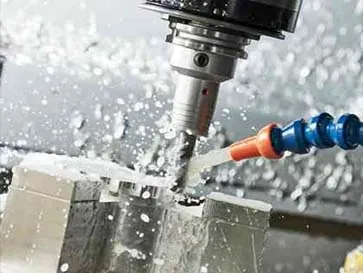
Butyl PAG and emulsifier roles in synthetic / semi-synthetic fluids—specify by operation, metal, and dilution.
Read article
Wetting vs dispersing, TiO₂ vs colorants, flocculation signs, and how to request Esteem grind grades.
Read article
Cratering, fisheyes, crawling—when post-add wetting (including Venadol) differs from latex polymerization emulsifiers.
Read article
Non-silicone and EO/PO paper defoamers for brown-stock washing, white water, and coating kitchens—how to specify Esteem mill grades.
Read article
Flotation vs wash deinking, stubborn toner and UV inks, enzymes, and EO/PO detergents for recycled-fiber brightness.
Read article
Internal vs surface sizing, synthetic wax emulsions, DADMAC fixators, and dry/wet strength aids—specify by Cobb, not by a generic “size.”
Read article
Restore felt permeability and vacuum: shower vs boil-out, stickies and pitch, and how to trial Esteem VENPAPER-F detergent.
Read article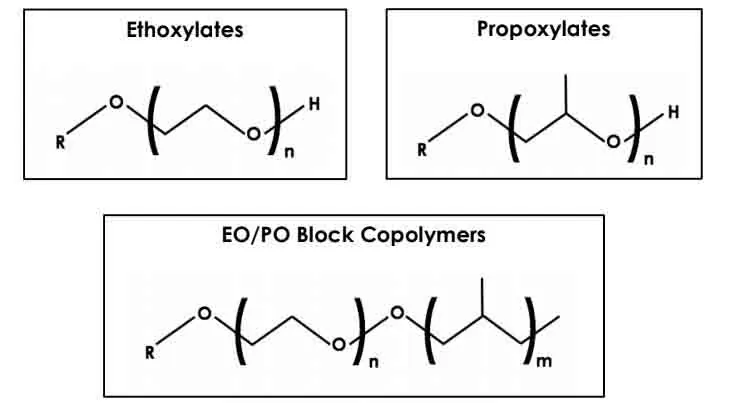
Why capping a nonionic hydroxyl gives caustic stability and low foam—TCF 10 vs CSLF-17, APEO, and metal-cleaning specification.
Read article
Non-silicate peroxide stabilizers, silicate-bath auxiliaries, optical brighteners, and mill slimcides—specify Esteem VENPAPER AGA, SB, and OB by job.
Read article
VENPAPER SC 1 vs AST—fiber dispersion, cylinder tack, and flocculant retention so formation and first-pass retention are separate mill jobs.
Read article
Grade selection by pH window and metal—H-Quest HEDTA, C 100/L 50 glucoheptonate, and TSS for polyacrylamide—not a generic EDTA swap.
Read article
Product PIO vs fatty alcohol ethoxylates vs anti-settling—electrostatic vs steric stabilization for coatings, paper fillers, and dye baths.
Read article
BEP and PBP grades by molecular weight, cloud point, viscosity, and pour point—specify a lubricant window, not a random PAG.
Read article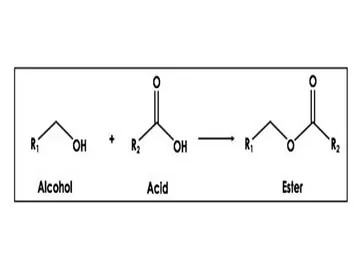
Glycerol esters from esterification: GMS NSE vs SE, GML, GMO, GTS, GTO, and PEG-bridged cocoates for creams, food-adjacent emulsifiers, and industrial lubricity.
Read article
Glycol esters from esterification: EGMS, EGDS, PGMS, and PGDS as pearlizers, emollients, co-emulsifiers, and industrial lubricity aids from Esteem Industries.
Read article
PEG esters and methoxy PEG esters from esterification: HLB vs PEG MW, MPEG 350 laurate/oleate, PEG-7 glyceryl cocoate, and solubilizer selection by Esteem.
Read article
Methyl ester ethoxylates (MEE): FAME plus EO nonionics for low-foam detergency, agro wetting, and biodegradable cleaning—how to specify Esteem grades.
Read article
Esterification mechanism, catalysts, glycol/glycerol/sorbitan/PEG esters, HLB emulsification, cosmetics and industrial uses by Esteem Industries.
Read article
Amidation of fatty acids with alkanolamines to make CMEA, CDEA, and related amides—mechanism, superamide vs Kritchevsky, foam and viscosity.
Read article
Alkoxylation as the umbrella process for ethoxylation, propoxylation and EO/PO sequences—starters, catalysis, HLB and how Esteem plants run the chemistry.
Read article
Ethylene oxide addition to alcohols, acids, amines and oils—mechanism, catalysts, cloud point, 1,4-dioxane control and Esteem ethoxylate grades.
Read article
Propylene oxide addition for hydrophobicity and foam control—mechanism, cloud-point effects, industrial cleaners and how PO differs from EO.
Read article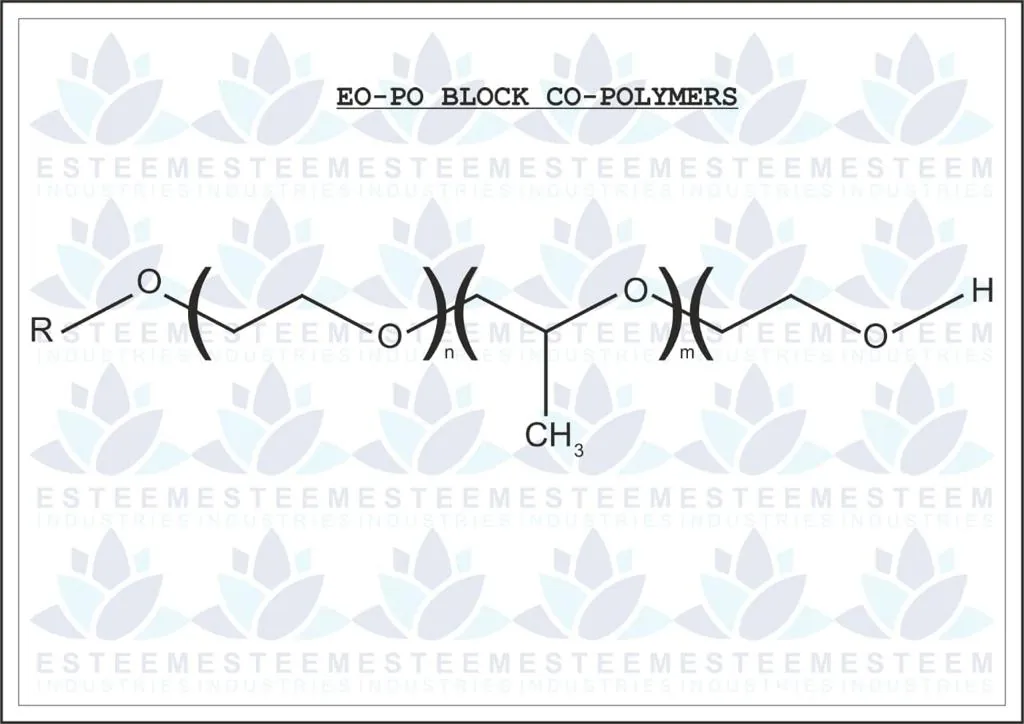
EO/PO block vs random sequences for low foam, defoaming, lubricity and wetting—how Esteem specifies copolymer architecture.
Read article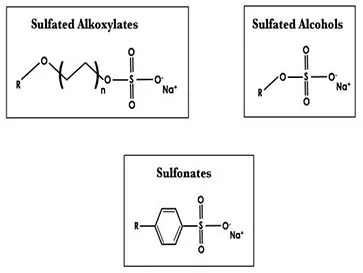
Sulfate ester formation on alcohols and ethoxylates—SO3/oleum routes, neutralization, SLS vs SLES, and dioxane control for detergent anionics.
Read article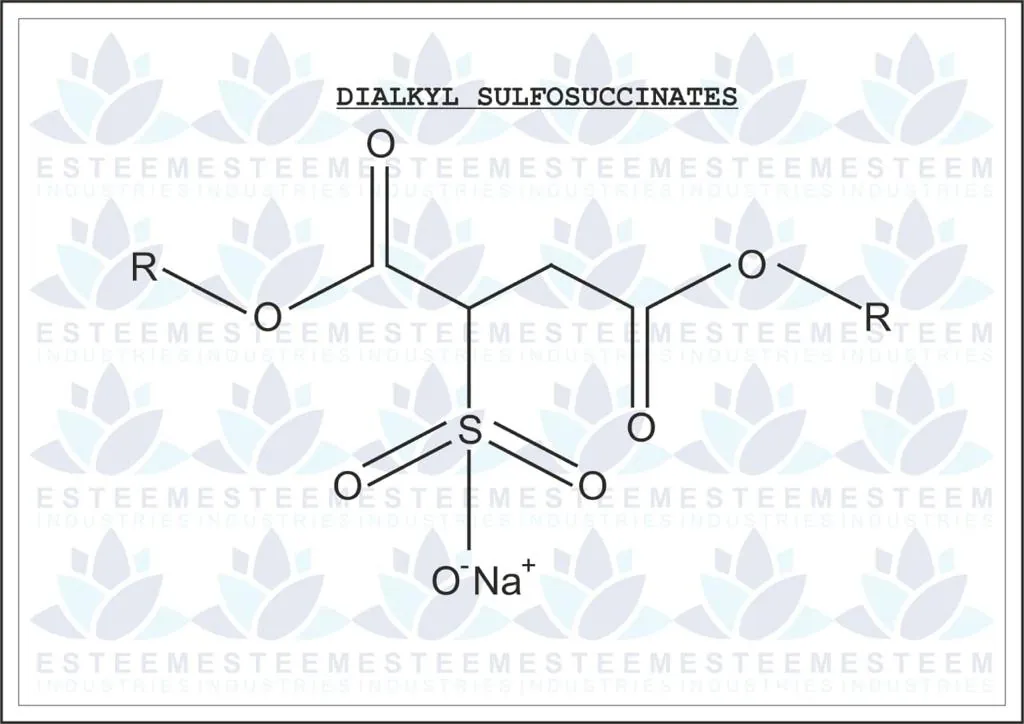
C–SO3 chemistry for aromatic sulfonates, sulfosuccinates and emulsion-polymerization wetting—how sulfonation differs from sulfation.
Read article
Sulfamation and sulfamate routes in specialty synthesis—how the process differs from sulfation/sulfonation and when Esteem evaluates it for custom work.
Read article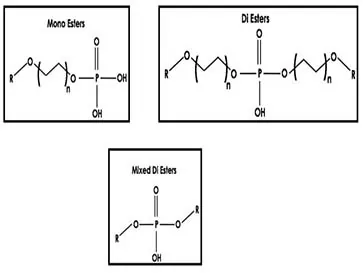
P2O5 phosphation of alcohols and ethoxylates to mono/di phosphate esters—acid vs salt forms, emulsifying, anti-stats and corrosion inhibition.
Read article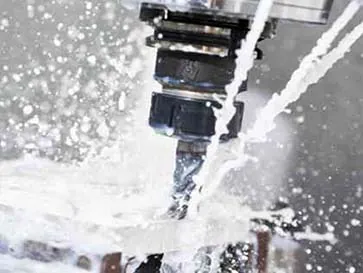
Carboxymethylation of fatty alcohol ethoxylates—mild anionics, hard-water tolerance, corrosion inhibition and how to specify grades with Esteem.
Read article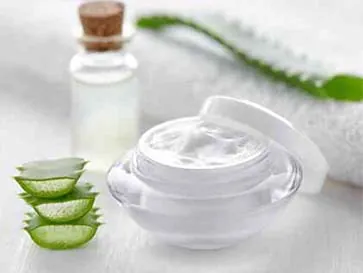
Converting tertiary amines to quaternary ammonium salts—fabric softeners, biocides, oilfield and textile uses, and Esteem custom synthesis.
Read article
Phenol-, urea- and melamine-formaldehyde resins, DMA–epichlorohydrin copolymers—and how resin polymerization differs from emulsion polymerization uses.
Read article
Imidazoline manufacture from fatty acids and polyamines—corrosion inhibitors, softener intermediates, amidification routes and quaternized derivatives.
Read article
What is industrial emulsification? Mechanical versus chemical routes, HLB matching, and the surfactant emulsifiers used in creams, agro EC and coatings.
Read article
Ester alkoxy exchange to make FAME and specialty esters—how transesterification differs from esterification and feeds methyl ester ethoxylates.
Read article
How zwitterionic betaines are made from amidopropyl amines—mild foam boosters vs alkanolamides, and Esteem coco betaine grades.
Read article
MEA and MMA hexahydrotriazines for hydrogen sulfide scavenging in oil and gas—process chemistry and how to specify grades with Esteem.
Read article
Specialty dithiocarbamate chemistries (SDMC, KDMDC, NABAM)—industrial custom synthesis context and how they sit in Esteem miscellaneous chemistries.
Read article
Oxidation of tertiary amines to amine oxides—lauryl and octyl grades for foam and mildness versus betaines and alkanolamides.
Read article
What is surfactant neutralization? Acid–base finishing of sulfates, sulfonates and esters to a named salt, pH and COA window.
Read article
What is surfactant blending? Homogenization QC, toll versus custom packages, and how actives are finished into a shippable blend.
Read article
What is ethoxylate distillation? Stripping residual oxide, water, light glycols and odour, including how to specify 1,4-dioxane.
Read article
Phenol, urea and melamine–formaldehyde resin chemistry—how it sits in miscellaneous chemistries and HS&E honesty for buyers.
Read article
When to specify a chelant vs a complexing agent—hard water, bleach baths, plating and cleaning language decoded.
Read article
Tank foam vs microbubbles in film—how to choose defoamers versus degassing agents for coatings and process systems.
Read article
Concentrate clarity vs clear oil/fragrance systems—when hydrotropes and solubilizers are not interchangeable.
Read article
Conditioning quats vs betaine mildness boosters—charge, rinse-off rules, and when not to blend them blindly.
Read article
Positive-charge amphiphiles for softeners, conditioners and biocides—how quaternization builds the grades Esteem specifies.
Read article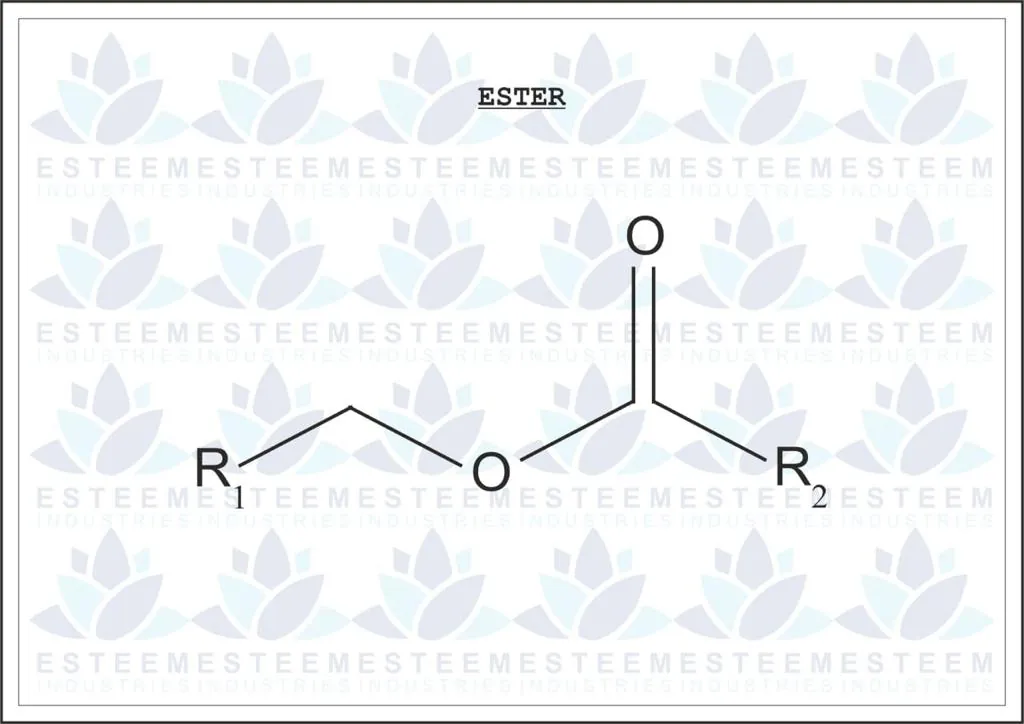
How emulsifiers stabilize O/W and W/O systems—and how Esteem maps grades across agro, personal care and coatings.
Read article
Clear aqueous solutions of oils and actives—castor ethoxylates, PEG esters and Esteem solubilizer routes for care and fuel.
Read article
Emollient vs humectant vs occlusive—how Esteem esters and conditioners build skin and hair feel.
Read article
How fluorescent whitening agents create perceived brightness—and how they fit Esteem bleaching-aid programs.
Read article
Coupling hydrophobic surfactants into clear aqueous concentrates—hydrotrope science for detergent formulators.
Read article
Silane-type adhesion vs surfactant coupling of oils—how coatings formulators should read the keyword on an RFQ.
Read article
Penetration vs wetting for textile, leather and agro sprays—how Esteem wetters and Venadol grades help actives reach the substrate.
Read article
Controlling static on textiles and plastics—ethoxylate and quaternary routes relevant to Esteem chemistries.
Read article
How dye retarders slow strike for level shades—and how they differ from leveling agents in textile auxiliaries.
Read article
Threshold inhibition vs chelation for CaCO₃ and sulfate scales—how water and oilfield programs relate to Esteem chelants.
Read article
Mineral ID, BaSO₄ vs carbonate, squeeze vs continuous—honest routing to Esteem chelants and oilfield programmes.
Read article
Keeping fuels and oils flowing in the cold—PPD science and how it sits next to Esteem lubricity and oilfield chemistries.
Read article
WAT vs pour vs CFPP, PPD vs paraffin deposition—cold-flow briefs without inventing Esteem PPD SKUs.
Read article
Polymer DRA for pipelines—how drag reduction differs from lubricity aids and EOR polymers on an oilfield RFQ.
Read article
Turbulent drag, shear degradation, and when “won’t flow” is wax or scale—not a DRA job.
Read article
Air release vs defoaming in coatings—how microfoam defects relate to wetting and Esteem paint auxiliaries.
Read article
Primary foamers vs boosters—how Esteem maps foaming agents for personal care, detergents, and oilfield unloading packages.
Read article
How chelants bind Ca, Mg, Fe and Mn—and how Esteem H-Quest grades support bleach, cleaners, and water treatment.
Read article
Electrostatic vs steric dispersion for pigments, dyes, and UV filters—and how to specify Esteem dispersants.
Read article
Static vs dynamic wetting, APEO-free choices, and how Esteem ethoxylates and Venadol grades wet textiles and coatings.
Read article
NIS, oils and silicone spreaders—tank-mix vs in-can emulsifiers, and how to write an agro adjuvant RFQ.
Read article
Organosilicone adjuvants for foliar coverage and rainfastness—vs NIS wetters, crop-safety limits, and label discipline.
Read article
Oil–water emulsion breakers for crude dehydration—vs defoamers and emulsifiers, and how to bottle-test with Esteem.
Read article
Betaines, CAPB and amphoacetates for mild foam—how zwitterionics differ from cationics in rinse-off care.
Read article
Petroleum COC vs methylated seed oil—emulsifier bloom, hard water, and how to RFQ oil-adjuvant packages.
Read article
Sulfates, sulfonates and sulfosuccinates—primary detergency and foam, and when to pair with nonionics.
Read article
Ethoxylates for emulsifying and wetting—HLB, cloud point, APEO-free choices, and RFQ language.
Read article
Delivery formats beyond EC / ME / SC—surfactant jobs for oil dispersions, suspo-emulsions, EW and capsule suspensions.
Read article
Anionic esters from phosphation—alkaline emulsifying, wetting and corrosion-assist chemistry for cleaners and metal wash.
Read article
Clean and wet with minimal foam—vs defoamers, EO/PO and end-capped families for spray wash and CIP.
Read article
How bleaching chemistry works with peroxide systems—and how Esteem bleaching aids and chelants protect brightness.
Read article
Complexing vs chelating for metal cleaning and plating baths—how Esteem metal complexing grades fit industrial RFQs.
Read article
Knock-down foam control versus demulsification and low-foam surfactants—paper, oilfield, and process selection tips.
Read article
Film-forming vs neutralizing inhibitors—imidazoline routes and how Esteem specifies oilfield and industrial protection packages.
Read article
Salt curves, alkanolamides, and ethoxylate thickeners—how Esteem builds viscosity in shampoos and creams.
Read article
EGDS/EGMS and liquid pearl concentrates—how Esteem creates pearlescence in shampoos and body washes.
Read article
Glycerin, glycols, and PEG humectancy versus emolliency—how Esteem specifies skin and hair moisture systems.
Read article
Why formulas need preservation, phenoxyethanol and quat options, and how Esteem grades support challenge-tested chassis.
Read article
Wet and dry rub fastness for leather and textile—how Esteem dye fixing agents lock color after dyeing.
Read article
How leveling auxiliaries prevent shade patches in textile and leather dyeing—and how to specify Esteem systems.
Read article
Friction reduction in metalworking and drilling fluids—how Esteem lubricity aids complement emulsifiable packages.
Read article
Internal and surface sizing for printability and Cobb control—how Esteem paper sizing chemicals fit mill programs.
Read article
CMEA, CDEA, and lauramide MEA from amidification—how fatty acid amides densify lather and thicken SLES, LAS, and sulfate-free detergent chassis.
Read article
When to use coco alkanolamides versus cocamidopropyl betaine for foam, viscosity, mildness, processing, and DEA policy in shampoo and detergents.
Read article
Phenoxyethanol vs phenoxypropanol vs BKC vs iminodipropionate—specify Esteem preservative grades by cream, wash, or sanitizer chassis.
Read article
CMEA, glyceryl cocoates, coco betaine, and lauryl amine oxide—map Esteem foam grades without treating every co-surfactant as CMEA.
Read article
Steareth/Ceteth and PEG stearates for O/W body vs CMEA and coco betaine for shampoo salt-curve—specify Esteem thickeners by format.
Read article
Hydrogenated castor 50EO, PPG-26 oleate, and polysorbates—cosmetic dispersion, not industrial naphthalene sulfonate grind.
Read article
Ceteth-2 vs Ceteth-20, Steareth-2/20/21, Laureth-4/12/23, Oleth-10/20, and Ceteareth-20—cream pairs vs fragrance solubilizers from Esteem’s table.
Read article
PEG-200/400 mono and di laurate, stearate, and oleate vs PEG-1500/1750/2000 stearates—wetting, micro-emulsion, or cream body from Esteem’s table.
Read article
Disodium laureth sulfosuccinate, octyl sulfosuccinate, and potassium cocoate 40% as primary mild wash bases—not foam boosters.
Read article
Textile scouring and wetting agents: fatty alcohol ethoxylates, cloud point, low-foam jet dyeing, and how to specify APEO-free pretreatment surfactants from Esteem Industries.
Read article
Textile dyeing auxiliaries for leveling and dispersing—cotton reactive vs polyester disperse, foam in jets, and APEO-free ethoxylate building blocks from Esteem Industries.
Read article
APEO-free textile auxiliaries for Indian export mills: replace NPE/OPE with alcohol ethoxylates, manage foam and cloud point, and meet brand RSL with Esteem chemistry.
Read article
Tank-mix adjuvants for agro sprays: NIS vs COC vs MSO vs silicone spreaders—when to wet, spread, or penetrate, and which Esteem surfactants belong in the blend.
Read article
SC and WG agro surfactants: mill wetting, dispersing, low foam, and why they are not the same as EC emulsifier packages. Technical guide from Esteem Industries.
Read article
Agrochemical bloom and hard-water stability: diagnose EC cream and oil-off, CIPAC-style tests, and HLB-matched castor/alcohol ethoxylate pairs from Esteem.
Read article
A surfactant is an amphiphilic molecule that lowers surface or interfacial tension. This guide covers structure, ionic types, HLB and CMC, and industrial uses.
Read article
The definition of detergent/s are product/s intended for use of washing and cleaning process in domestic or industrial areas (examples as in washing machines; dish washers etc).
Read article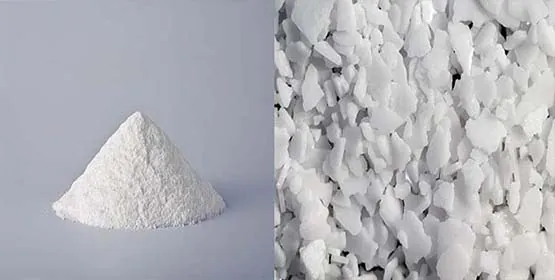
Polyethylene glycol or abbreviated as PEG is a polyether chemical compound. It is formed by the addition of ethylene oxide to ethylene glycol or diethylene glycol. The common structure of PEG can be expressed as H−(O−CH2−CH2)n−OH. PEG is a hydrophilic molecule, having low toxicity, flexibility.
Read article
Nonionic surfactant refers to the surfactant molecules, which do not undergo ionization when being dissolved in water.
Read article
Every emulsifier is a surfactant, but not every surfactant is an emulsifier. Learn the key differences, HLB basics, and how to choose between surfactants and emulsifiers for your formulation.
Read article
Nonionic surfactants offer hard-water tolerance, controllable foam, and broad compatibility. Types, cloud point, CMC, HLB, and industrial applications.
Read article
Fatty alcohol ethoxylates (FAE) are the workhorse nonionic surfactants. Learn about grades by chain length, EO moles, HLB values, and applications across detergents, textiles, and personal care.
Read article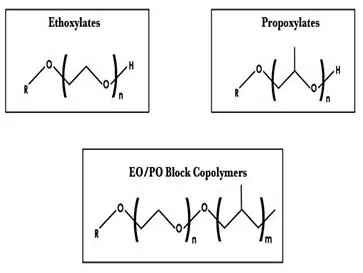
Fatty amine ethoxylates deliver antistatic, emulsifying, and corrosion-inhibiting properties. Explore stearyl, coco, and tallow amine ethoxylate types and their industrial applications.
Read article
Demulsifiers break water-in-oil and oil-in-water emulsions in crude oil processing and wastewater treatment. Learn about types, mechanisms, selection criteria, and oilfield applications.
Read article
Fatty acid ethoxylates feature an ester bond that provides unique lubricity, mild skin feel, and emulsification. Explore stearic, oleic, and lauric acid ethoxylate grades and uses.
Read article
The HLB (Hydrophilic-Lipophilic Balance) scale is a formulator's essential tool. Learn about the 0–20 scale, required HLB values, blend calculations, and worked formulation examples.
Read article
Complete technical guide to the four surfactant ionic classes—structures, properties, applications, and a practical selection matrix from Esteem Industries Pvt Ltd.
Read article
Technical guide to acid thickeners for toilet cleaners — amine ethoxylate chemistry, HCl vs organic acids, viscosity building, stability, and formulation tips from Esteem Industries.
Read article
Guide to acid thickeners across personal care, home care and detergents — chemistry, selection, dosage, and compatibility with anionic and nonionic surfactants. By Esteem Industries.
Read article
How surfactants improve agrochemical efficiency — adjuvants, wetting, spreading, rainfastness, and EC/SC/WG formulation systems. Technical guide by Esteem Industries.
Read article
Technical guide to NPE and OPE alkyl phenol ethoxylates for industrial coatings—emulsification, grades, regulatory notes, and APE-free alternatives from Esteem Industries export capability.
Read article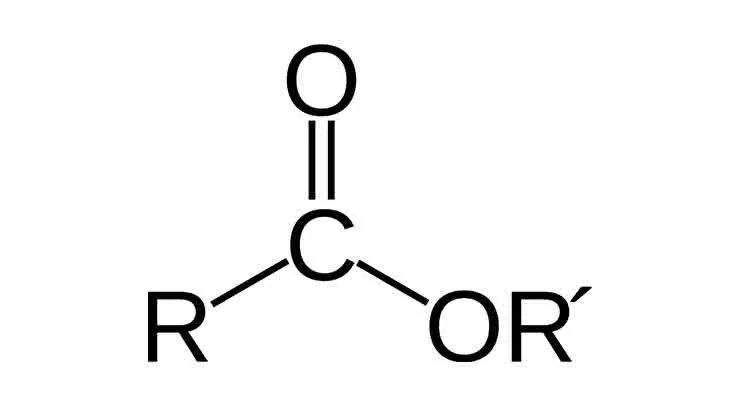
Compare NPE, castor oil ethoxylates, and sorbitan esters for agrochemical EC formulations—HLB, bloom, stability, and a practical selection guide from Esteem Industries.
Read article
Technical guide to blending polyethylene glycol (PEG) with surfactants, solvents, preservatives, and actives. Compatibility rules, synergies, and outcomes for pharma, cosmetics, and industrial formulations from Esteem…
Read article
How castor oil ethoxylates and PEG-40 hydrogenated castor oil solubilize fragrance and essential oils. HLB guidance, clear-system methods, usage levels, and formulation tips from Esteem Industries.
Read article
Deep guide to the chemical composition of sorbitan esters — sorbitan ester types, esterification chemistry, HLB values, and industrial potential in personal care, agrochemicals, and specialty formulations. By Esteem Industries.
Read article
Decision framework for choosing the right surfactant by function, HLB, ionic type, industry, foam profile, and hard-water tolerance. Expert guide from Esteem Industries Pvt Ltd.
Read article
Cocamidopropyl betaine (CAPB) in personal care: mildness, foam boosting, surfactant compatibility, and shampoo/body wash formulation guidance from Esteem Industries Pvt Ltd.
Read article
Coco mono ethanol amide (CMEA) applications, benefits, and industrial uses — foam boosting, viscosity building, detergents, and personal care guidance from Esteem Industries Pvt Ltd.
Read article
Technical guide to coco monoethanolamide (CMEA) as a foam booster and viscosity builder with SLES in detergents, shampoos, and industrial cleaners. Dosage, mechanisms, and formulation tips from Esteem Industries.
Read article
Compare coco monoethanolamide (CMEA) and cocodiethanolamide (CDEA) for soaps, detergents, cosmetics, and hair care—performance, processing, and nitrosamine/DEA considerations from Esteem Industries.
Read article
Compare nonylphenol, octylphenol, cardanol, and styrenated phenol ethoxylates—properties, HLB behaviour, regulatory fit, and application guidance from Esteem Industries.
Read article
Technical guide to decyl alcohol ethoxylates (C10 AE) for industrial applications — grades by EO moles, HLB, wetting, detergency, foam control, and formulation tips from Esteem Industries Pvt Ltd.
Read article
How decyl alcohol ethoxylates power household cleaning — low foam/high wetting balance, hard-surface cleaners, laundry liquids, and formulation guidance from Esteem Industries Pvt Ltd.
Read article
Guide to emulsifiable concentrates (EC) — formulation anatomy, emulsifier packages, bloom, hard-water stability, and agrochemical performance.
Read article
How Indian emulsifier manufacturers drive agro innovation—EC/SC adjuvants, local formulation support, and Esteem Industries chemistries for crop protection performance.
Read article
Learn how emulsifiers shape gloss, flow, and film formation in decorative coatings—latex polymerization aids, wetting, defect control, and Esteem Industries chemistries.
Read article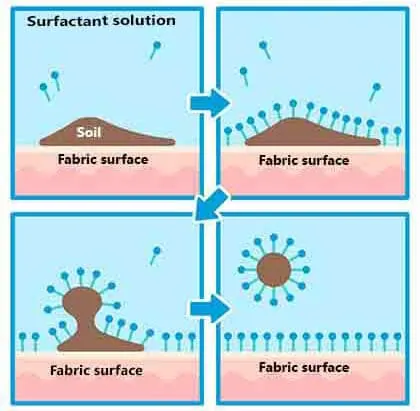
Emulsifier science for industrial stability—mechanisms, HLB, Bancroft's rule, coalescence prevention, and industry case applications from Esteem Industries.
Read article
Technical guide to emulsifying waxes for stable cosmetic and pharmaceutical emulsions—composition, HLB design, cream and lotion architecture, process tips, and Esteem Industries surfactant solutions.
Read article
How EO/PO condensates and block copolymers shape modern surfactant manufacturing—defoamers, detergency, cloud point, and export-ready supply for Southeast Asia framed by Esteem Industries.
Read article
Learn how EO/PO copolymers enhance surfactant flexibility—normal and reverse blocks, cloud point engineering, low-foam performance, and rinse-aid design from Esteem Industries.
Read article
Deep guide to ester chemistries in cosmetics, agrochemicals, paints, textiles, and manufacturing—emulsifiers, lubricants, HLB selection, and industrial applications from Esteem Industries.
Read article
Technical guide to ethylene oxide condensates—ethoxylation chemistry, HLB control, cloud point, and industrial applications across detergency, emulsification, agrochemicals, textiles, and oilfield chemistry.
Read article
Technical guide to fatty alcohol esters in metalworking—lubricity, emulsifiable oils, cutting fluids, rolling oils, and pickling process aids framed for Esteem Industries global and UK-facing industrial customers.
Read article
Technical guide to fatty alcohol propoxylates—chemistry, cloud point, low-foam behaviour, EO/PO architecture, and industrial applications. Expert insight from Esteem Industries Pvt Ltd.
Read article
In-depth guide to glycol ethers—E-series vs P-series, key properties, and applications in paints, cleaners, and chemical formulations. Technical insight from Esteem Industries.
Read article
Sourcing high-quality nonylphenol ethoxylates and alkyl phenol ethoxylates for Indian paint manufacturing—grade selection, quality parameters, and Esteem Industries’ manufacturing perspective.
Read article
Technical guide to anionic–nonionic surfactant synergy in cleaning: micelle packing, hard-water tolerance, foam control, soil removal, and formulation ratios for home care, I&I, and industrial cleaners. By Esteem…
Read article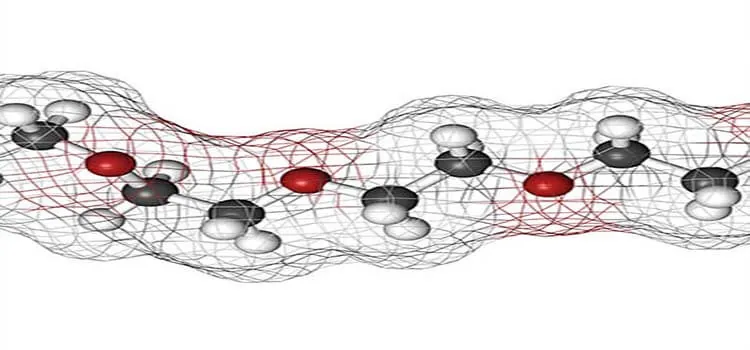
Industrial PEG applications from agriculture to ceramics — molecular weight grades, functions as solvent, binder, humectant, and lubricant. Technical guide by Esteem Industries with links to Polyethylene Glycol products.
Read article
Complete guide to lauryl alcohol ethoxylate (LAE) — EO mole variants, HLB, benefits, and industrial uses in detergents, personal care, textiles, agrochemicals, and cleaners. By Esteem Industries.
Read article
Deep-dive selection matrices, CMC/Krafft/cloud-point properties, and formulation examples for nonionic, anionic, cationic, and amphoteric surfactants from Esteem Industries.
Read article
Complete nonyl phenol ethoxylate grade guide—properties and applications for NPE-2, NPE-4.5, NPE-9, NPE-10, NPE-30 and NPE-40 from Esteem Industries.
Read article
Technical guide to nonylphenol ethoxylate (NPE) mole variants—cloud point, HLB, wetting, emulsification, and process performance for textiles, coatings, metal cleaning, and agrochemicals. By Esteem Industries.
Read article
Complete guide to nonylphenol ethoxylate—chemistry, HLB vs EO moles, industrial applications, regulatory landscape, and NPE alternatives from Esteem Industries.
Read article
Guide to paraffin wax emulsifier packages for paper, wood, textiles, polishes, and commercial coatings—HLB design, stability testing, and process tips from Esteem Industries.
Read article
In-depth guide to polyethylene glycol 200 (PEG 200)—properties, industrial applications, formulation benefits, and how it pairs with surfactants. From Esteem Industries.
Read article
Compare PEG 200, PEG 400, and PEG 600 properties, viscosity, solvency, and industrial applications. Expert polyethylene glycol selection guide from Esteem Industries for pharma, cosmetics, and process chemistry.
Read article
How PEG 6000 works as a pharmaceutical binder and tablet coating plasticizer. Melting behavior, wet/melt granulation, film coating, lubricity, and excipient selection guidance from Esteem Industries.
Read article
QC checklist for pharmaceutical-grade polyethylene glycol: molecular weight, viscosity, moisture, residual EO, dioxane, heavy metals, microbial limits, and COA interpretation. Guidance from Esteem Industries.
Read article
Technical comparison of polyethylene glycol 400 versus PEG 200, 300, 600, 1500, 4000, and 6000. Physical properties, solvent power, pharma and cosmetic uses, and selection guidance from Esteem Industries.
Read article
Complete technical guide to polyethylene glycol 6000 (PEG 6000): physical properties, pharmaceutical binders and ointment bases, cosmetic uses, and industrial applications from Esteem Industries.
Read article
How polyethylene glycol (PEG) strengthens stability as a co-solvent and emulsion support aid in pharmaceutical and cosmetic formulations. Roles vs true emulsifiers, design rules, and Esteem Industries guidance.
Read article
Technical guide on how polyethylene glycol (PEG) improves physical and chemical stability of pharmaceutical formulations—solid dispersions, solutions, ointments, and soft gels. Expert insight from Esteem Industries.
Read article
Technical guide to polyethylene glycol in ophthalmic eye drops, ointments, and rectal suppositories—grade selection, osmolarity, bases, and stability from Esteem Industries.
Read article
Deep guide to PEG-infused hydrogels for drug delivery, wound care, and tissue engineering—network design, swelling, release control, and raw-material selection from Esteem Industries.
Read article
Complete guide to polyethylene glycol applications and types—liquid and solid PEG grades, pharmaceutical, cosmetic, and industrial uses—mapped to Esteem Industries’ PEG and specialty chemical product range.
Read article
Complete technical guide to polyethylene glycol grades, physical and chemical properties, and industrial applications across pharma, personal care, textile, ceramics, and specialty chemicals—from Esteem Industries.
Read article
Technical guide to polyethylene glycol hygroscopicity—how moisture uptake varies by PEG grade and what it means for pharmaceutical, cosmetic, and industrial product formulation, packaging, and stability.
Read article
Technical guide to polyethylene glycol (PEG) manufacturing — EO polymerization process, liquid and solid grades, quality parameters, and expanding uses in pharma, personal care, agrochemicals, and industry. By Esteem…
Read article
Compare Polysorbate 20, 60, and 80 — fatty acid hydrophobes, HLB values, solubilization vs cream emulsification, and industrial uses. Expert guide by Esteem Industries.
Read article
Complete guide to the Polysorbate series — chemistry, properties, HLB, emulsifying and solubilizing functions, and applications across personal care, pharma, agrochemicals, and industry. By Esteem Industries.
Read article
Technical guide to resin modification using aromatic rings and aliphatic side chains—industrial modifiers for coatings, adhesives, demulsifiers, and specialty polymers. By Esteem Industries.
Read article
Deep guide to nonionic surfactants in oilfield chemicals—emulsification, demulsification interfaces, foam control, HLB/cloud point design, and field selection. By Esteem Industries.
Read article
Complete technical guide to phosphate esters—chemistry, mono/di balance, alkaline cleaner performance, emulsification, metalworking, and selection. By Esteem Industries.
Read article
Technical guide to silicone (organosilicone) spreaders in agriculture — how they boost pesticide, herbicide and foliar fertilizer efficiency through wetting, spreading and deposit quality. By Esteem Industries.
Read article
How Esteem silicone (organosilicone) spreaders improve rainfastness and faster foliar absorption across global agro markets — mechanisms, rates, wash-off testing and formulation guidance.
Read article
Sorbitan esters as a versatile industrial ingredient range — HLB, sorbitan ester-type grades, personal care, agrochemicals, coatings, textiles and lubricants. Technical guide by Esteem Industries.
Read article
Technical guide to sorbitan esters in USA and global food emulsifier applications — bakery, confectionery, margarine, ice cream, HLB blending, and regulatory-aware formulation. By Esteem Industries.
Read article
Technical guide to sorbitan esters in lubricant and paint industries — metalworking fluids, rolling oils, pigment wetting, emulsion paints, HLB blending. By Esteem Industries.
Read article
Deep technical guide to sorbitan monooleate (SMO) as a cosmetic emulsion stabilizer — HLB, W/O creams, pigment wetting, sunscreen systems, and blend strategies. By Esteem Industries.
Read article
Technical guide to sorbitan monostearate (SMS-type) as a lipophilic emulsifier in nonionic systems—HLB, W/O and O/W blends, structure building, and industrial formulation practice from Esteem Industries.
Read article
Technical guide to sorbitan tristearate in textile processing—spin finishes, softener emulsions, wax dispersions—framed for Esteem Industries export to EU and German industrial customers.
Read article
Key surfactant applications in household cleaning, agrochemicals, and personal care—chemistry choices, formulation practice, and Esteem Industries guidance for USA and global markets.
Read article
Technical guide to surfactant-based metal parts cleaning for automotive and manufacturing—degreasing chemistry, foam control, multi-metal baths, and Esteem metal chemical solutions.
Read article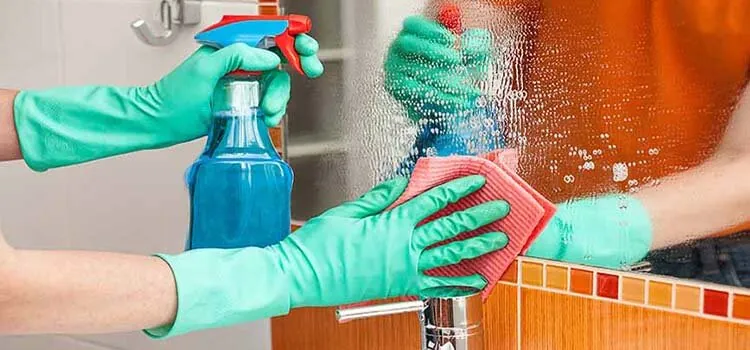
How formulators use Esteem surfactants across agro, coatings, textile, oilfield, home & personal care—plus RFQ checklist and manufacturer portfolios.
Read article
How surfactants revolutionize paints, textiles, and agrochemicals amid Middle East industrial demand—Esteem Industries chemistries, HLB selection, and export-ready formulation guidance.
Read article
Technical guide to Esteem Industries silicone spreader adjuvants for even plant spray coverage — wetting science, dose strategy, tank-mix practice, and agrochemical formulation support.
Read article
Esteem export guide to synthetic alcohol ethoxylates for textile wet processing in Vietnam, Kenya, and Argentina — scouring, wetting, foam control, and NPE-alternative formulation.
Read article
How specialty chemicals — surfactants, alkoxylates, esters, and emulsifiers from Esteem Industries — enable performance across personal care, agro, coatings, textile, oil & gas, and home care.
Read article
Deep guide to emulsifiers in industrial and commercial applications—HLB design, O/W and W/O systems, agrochemicals, paints, personal care, oilfield, and selection tips from Esteem Industries.
Read article
Technical guide to triethanolamine (TEA) in polymer stabilization and cross-linking—pH neutralization, emulsion latex stability, coatings, and surfactant synergy from Esteem Industries.
Read article
Comprehensive guide to surfactant science—types, interfacial functions, CMC, HLB, and industrial impact across cleaning, personal care, agrochemicals, coatings, and oilfield. By Esteem Industries.
Read article
Comprehensive technical insight into emulsifying wax for cosmetics and pharmaceutical topicals — chemistry, processing, stability, sensory design, and formulation guidance from Esteem Industries.
Read article
Technical guide to toilet cleaner and home hygiene formulations — acid thickeners, surfactant selection, cling viscosity, scale removal, and Esteem Industries homecare chemistries.
Read article
Explore the top 10 industrial uses of alkyl phenol ethoxylate (APE/NPE) — textiles, agrochemicals, paints, oil & gas, metal cleaning, and more. Technical guide by Esteem Industries.
Read article
Learn how triethanolamine (TEA) boosts emulsifier effectiveness in personal care creams and lotions through fatty-acid neutralization, TEA-stearate soaps, pH control, and synergy with nonionic emulsifiers. Guide by…
Read article
Formulation guide to triethanolamine (TEA) in shampoos and skin creams—pH control, TEA-stearate emulsions, processing tips, and ingredient synergies. Expert content from Esteem Industries.
Read article
Esteem Industries guide to triethanolamine TEA 85% and TEA 99% grades—specifications, grade selection, packaging, export documentation, and formulation fit for personal care and industrial buyers in India and global…
Read article
Explore how triethanolamine (TEA) delivers versatility across personal care, coatings, home care, metalworking, textiles, and agrochemicals—pH control, emulsifier neutralization, and formulation guidance from Esteem…
Read article
Technical guide to polysorbate 80—an ethoxylated sorbitan monooleate—for nutraceutical solubilization, softgels, syrups, and vaccine stabilization. Formulation insight from Esteem Industries.
Read article
Foundational guide to triethanolamine (TEA)—chemical structure, physical properties, pH control, emulsifying soap formation, benefits vs other alkalis, and formulation basics from Esteem Industries.
Read article
Esteem export guide to vegetable oil ethoxylates—especially castor oil ethoxylates—for agrochemical EC/EW systems and textile wet processing in Kenya, Turkey, Egypt, and Brazil.
Read article
Technical guide to sorbitan monolaurate (SML-type): chemistry, HLB ~8.6, emulsifier blends with Polysorbate 20, and industrial applications from Esteem Industries.
Read article
Guide to ester emollients and conditioning agents for hair and skin care. Understand emollient chemistry, sensory properties, and formulation from Esteem Industries.
Read article
Guide to humectants in skincare: glycerin, PEG, sorbitol, and polyol moisturizers for creams and lotions. Moisture retention science from Esteem Industries.
Read article
Formulate low-irritation facial cleansers with mild surfactant blends, optimal pH, and gentle foam. Face wash surfactant selection guide from Esteem Industries.
Read article
Complete shampoo formulation guide covering SLES, SLS, CAPB, CMEA surfactant chassis design, foam optimization, salt thickening, and mildness balancing from Esteem Industries.
Read article
Formulate sulfate-free body washes using glucosides, amino acid surfactants, and amphoterics. Complete guide to mild cleanser design from Esteem Industries.
Read article
Formulate baby washes and ultra-mild cleansers with amphoteric-forward surfactant ratios, residual control, and tear-free design from Esteem Industries.
Read article
Select O/W emulsifiers for creams and lotions: required HLB, fatty alcohols, PEG esters, and process control from Esteem Industries.
Read article
Formulate rinse-off hair conditioners with cationics, fatty alcohols, and esters. Coacervate 2-in-1 logic and process tips from Esteem Industries.
Read article
Formulate pearlescent shampoos with EGDS/EGMS glycol stearates. Cooling, surfactant chassis, and stability guidance from Esteem Industries.
Read article
Choose O/W and W/O emulsifiers for sunscreen: UV-filter solvents, pigment wetting, HLB blends, and water resistance from Esteem Industries.
Read article
Design chemical EOR surfactants for ultra-low IFT, ASP vs SP floods, salinity scans, and EO/PO hydrophobes. Guidance from Esteem Industries.
Read article
Select flowback surfactants to cut capillary water block, stay compatible with friction reducers, and protect regain permeability. Esteem Industries oilfield guide.
Read article
Apply MEA and MMA triazine H2S scavengers for oil and gas: stoichiometry, injection design, solids, and CO2 selectivity. Esteem Industries.
Read article
Choose film-forming oilfield corrosion inhibitors for CO2/H2S service, continuous vs batch treatment, and production-chemical compatibility. Esteem Industries.
Read article
Reduce torque and drag in WBM and ERD wells with ester and fatty-acid lubricity aids. Dose, contamination, and HSE guidance from Esteem Industries.
Read article
Foamer CD anionic vs Foamer HS hydroxysultaine—specify Esteem foam grades by air-mist, foam flood, or gas-well unloading.
Read article
T-Det N 100, PEG 4000, and PEG 8000 as solid stick chassis—not liquid foamers—for gas-well deliquification sticks.
Read article
H-Quest C 100, L 50, and calcium glucoheptonate for slurry pumpability above 200 °C—retarder building blocks, not finished Class G blends.
Read article
Phenol-formaldehyde resins and EPO for foam control vs Venamine polyamine alkoxylates for crude dewatering—map the published table by job.
Read article
Glyceryl mono-oleate vs tri-oleate for diesel impurity reduction and friction—fuel treat chemistry, not cream emulsifiers.
Read articleNo articles on this page match your search.
Choose anionic and nonionic ratios for laundry, dishwash, foam, and hard water.
Read guideMatch surfactants, emulsifiers, and mildness targets for cosmetics and toiletries.
Read guideApply wetting, scouring, and dyeing auxiliaries by fibre and machine type.
Read guideSelect beam-house, retan, and finishing chemicals for tannery process steps.
Read guideUse emulsifiers for gloss, flow, and film formation in coating systems.
Read guideSelect drilling, production, and treatment chemicals for field conditions.
Read guideApply chelants in water treatment and cleaning where hardness ions interfere.
Read guideSelect NIS, oils, silicone spreaders, and emulsifiers for crop-protection sprays and EC packages.
Read guideApply defoamers, sizing, and bleaching aids across pulp and papermaking process points.
Read guideChoose emulsifiers, phosphate esters, and low-foam surfactants for machining and metal cleaning.
Read guideBuild anionic–nonionic detergent chassis with practical hard-water tolerance for cleaners.
Read guideCommon questions about our surfactant and specialty chemical blog
No questions match that search.
Talk to Esteem Industries about surfactant selection, alkoxylates, and application support for your next project.